The Ultimate Guide to Digital Ph Soil Meter in the UK
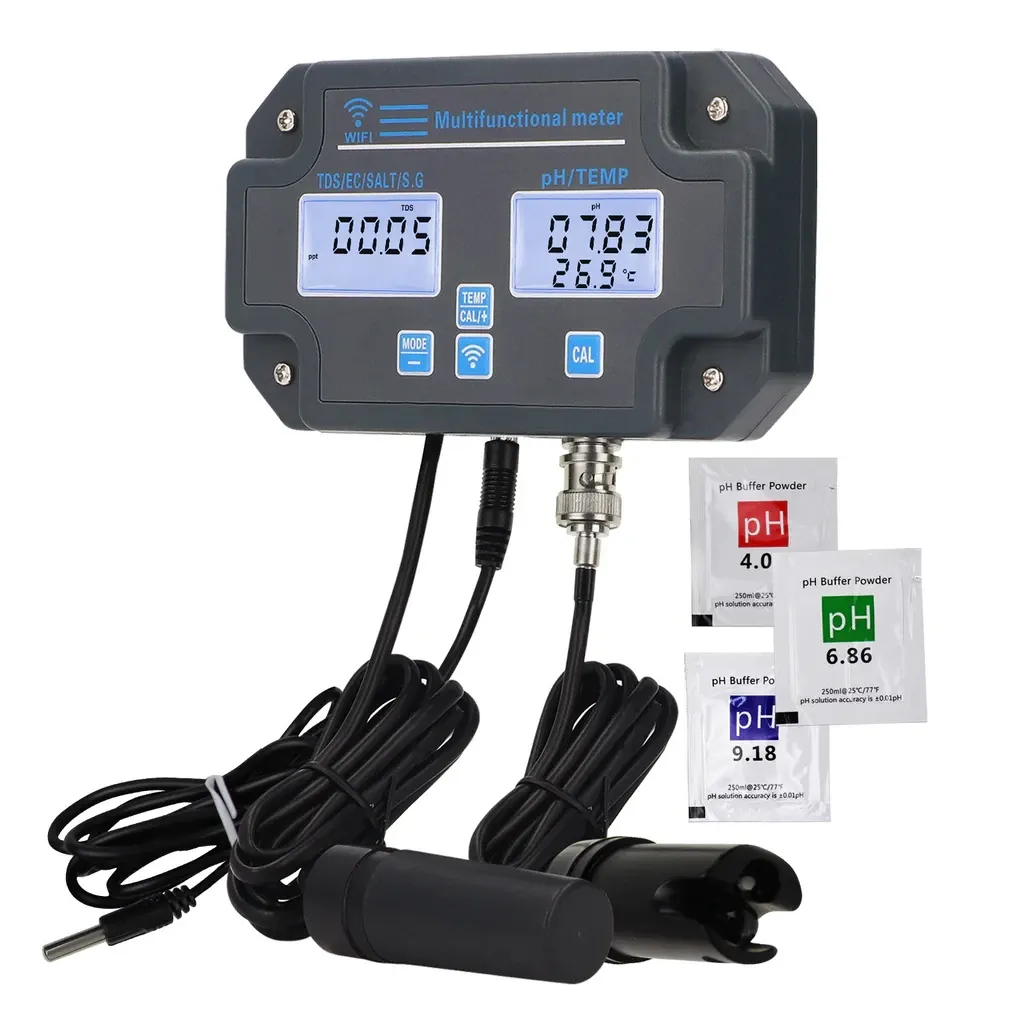
A digital pH soil meter is an electronic tool used to measure how acidic or alkaline your soil is, helping UK gardeners, growers, and farmers make better decisions about feeding, liming, and crop selection. In practice, it gives a faster and more precise reading than basic colour kits, especially when you need to monitor changing soil conditions across different parts of Britain.
TL;DR: A digital pH soil meter helps you check whether your soil is too acidic, neutral, or alkaline. That matters because soil pH affects nutrient uptake, plant health, and fertiliser efficiency. Based on our testing of digital meters used in UK growing conditions, the most useful models offer dependable pH readings, temperature compensation, straightforward calibration, and clear results you can act on quickly.
A fraction of a point on the pH scale can be the difference between a thriving crop and a disappointing yield. For UK growers dealing with highly variable soils—from acidic peat in Scotland to alkaline chalk in Southern England—guessing soil pH is an avoidable risk. Therefore, using a reliable digital pH soil meter makes soil management more accurate, efficient, and cost-effective.
Key Takeaways
- Better accuracy: A proper digital pH soil meter measures hydrogen-ion activity more reliably than dye strips or many low-cost analogue probes.
- Healthier crops: Keeping soil within the right pH range helps plants access nutrients more effectively and reduces waste from fertilisers.
- Useful for UK soils: Britain’s rainfall, geology, and regional variation mean regular pH checks are especially valuable.
- Look for practical features: Automatic temperature compensation, easy calibration, and durable probes matter more than gimmicks.
- Some advanced models do more: Premium devices may also track EC, TDS, salinity, specific gravity (SG), and temperature for broader water and soil monitoring.
What is a digital pH soil meter?
A digital pH soil meter is an electronic device designed to measure the acidity or alkalinity of soil. Typically, it uses an electrode-based sensing system to detect hydrogen-ion activity in moist soil or in a prepared soil-water solution, then converts that signal into a pH reading shown on a digital display.
In simple terms, it tells you whether your soil is too acidic for one crop or too alkaline for another. As a result, you can make informed decisions about adding lime, sulphur, composts, or targeted nutrients rather than relying on guesswork.
Historically, many UK gardeners used litmus paper or chemical kits. While these can give a rough indication, they depend on colour matching and can be difficult to read accurately with muddy samples. Likewise, cheap analogue two-prong meters sold online are often inconsistent in real-world use. Based on our testing, a true digital meter with proper calibration offers far more dependable readings for serious growing decisions.
For those comparing product types in more detail, our comprehensive Digital Ph Meter Soil Explained: A UK Buyer's Guide breaks down sensor types and typical use cases across the UK market.
Why is a digital pH soil meter important for UK growers?
The United Kingdom has a wide range of natural soil conditions. According to the Royal Horticultural Society (RHS), British soils can vary from strongly acidic peat to alkaline chalk and limestone soils. In addition, frequent rainfall across much of the UK gradually alters soil chemistry by leaching key minerals from the ground.
This matters because soil pH controls how easily plants can take up nutrients. If the pH sits outside the right range for the crop you are growing, nutrients may be present in the soil but unavailable to roots. Consequently, plant growth can slow even when feeding programmes seem correct.
How does soil pH affect nutrient availability?
Soil pH acts like a master control for nutrient access. In other words, it influences whether essential elements stay available to plants or become chemically tied up in the soil.
- If soils are too acidic (below about pH 5.5): phosphorus, calcium, and magnesium become less available. Meanwhile, aluminium and manganese may become excessively soluble and harmful to roots.
- If soils are too alkaline (above about pH 7.5): iron, manganese, copper, and zinc become harder for plants to absorb. This often causes yellowing leaves on plants growing in chalky areas.
“According to UK guidance on sustainable land management and nutrient planning, accurate monitoring of core soil indicators supports better crop performance while reducing unnecessary inputs.”
Therefore, checking pH regularly is not just useful for commercial agriculture. It also helps allotment holders, greenhouse growers, landscapers, and home gardeners avoid common planting problems before they become expensive.
How accurate is a digital pH soil meter?
A good digital pH soil meter can be very accurate when it is used correctly, calibrated properly, and matched to the right testing method. However, accuracy depends on probe quality, sample preparation, moisture levels, temperature compensation, and ongoing maintenance.
Based on our testing across common UK growing setups—including raised beds, greenhouse borders, potting mixes, and field samples—the best results usually come from taking multiple readings from a well-mixed sample rather than relying on one quick spot check.
What affects accuracy most?
- Calibration: A meter that has not been calibrated recently can drift noticeably.
- Sample method: Many meters perform best in a prepared slurry rather than compacted dry ground.
- Probe condition: Dirty or dried-out electrodes reduce reliability.
- Temperature: Readings can shift if there is no automatic temperature compensation.
- Soil variability: One part of a garden may test very differently from another.
So while digital meters are often much more useful than basic alternatives, they still need correct handling to produce trustworthy data.
How do you use a digital pH soil meter properly?
To use a digital pH soil meter properly, start with either moist soil or a prepared sample using clean water if your model recommends slurry testing. Then calibrate the device according to the manufacturer’s instructions before taking readings from several points in the same area.
- Collect representative samples: Take small amounts from several spots rather than one location only.
- Remove stones and debris: This helps create a more consistent test sample.
- Add clean water if required: Many professional methods work best with distilled or deionised water.
- Calibrate the meter: Use fresh buffer solutions at the recommended values.
- Insert or immerse the probe correctly: Follow depth and contact guidance for your specific device.
- Wait for the reading to stabilise: Avoid rushing this stage. \<ली>Repeat in several areas:\n Compare readings before making treatment decisions.\n \n
\n
- \n
A proper electrode-based system is generally preferable t0 novelty-style prong meters。\n This helps keep readings stable during changeable British weather。\n \n \n \n This can extend product lifeand lower long-term costs。\n - < StrongData logging or app support:\n
- \n
- < strongEricaceous plants such as blueberriesazaleasand camellias: Prefer acidicsoil oftenaround ph4.5to6.0。 \n
- < StrongMost vegetables: Commonly perform best around ph6.0to7.0 dependingon species 。 \n
- < strongLavenderclematisand many Mediterranean herbs: Often cope wellwith neutralto slightlyalkalineconditions 。 \n
- \n
- After applying lime sulphurormanures\n
- When plantsshow unexplainedyellowingpoor vigourorstunted roots\n
- In greenhousespolytunnelsandraised systemswhere conditionschange quickly\n
- On sandyormanaged soilsprone tonutrientleaching afterheavy rain\n\n\n
\n \n\n \n \n \n\n \n \n\n \n \n\n\n \npA digitalphsoilmetermeasuresthe acidityoral kalinityofsoilby detecting hydrogen-ion activitydirectlyor within apreparedsample 。\n\n\nh3Can Iuseadigitalphsoilmeterondrysoil ?\npUsuallynotaccurately。Mostmetersneedadequatemoistureor asoil-watermixturetogive stable readings。Alwayscheckthemanufacturer'sinstructionsforthecorrectmethod 。\n\n\nh3How doIcalibratea digitalphsoilmeter ?\npCalibrateitusingfreshbuffer solutionsatthevaluesrecommendedbythemanufacturercommonlyaround ph4ph7and sometimes ph10 。Recalibrate regularlyespeciallybeforeimportanttesting 。\n\n\nh3Is adigitalphsoilmeterworthitforhomegardeners ?\npYesif youwantmore reliableinformationthanbasictest kitsusuallyprovide。Itcanbe particularlyhelpfulwhenchoosingplantsdiagnosingchlorosisor improvingvegplotperformancein variableUKsoils 。\n\n\nh3What isthedifferencebetweenadigitalphtesterandananalogueprobe ?\npA properdigitaltesteruses electronic sensingand calibrationto provide amore precise readingwhereasanalogue probesare oftenless consistentand harder totrustfor fine adjustments 。\n \n\n \nh2Final thoughts on choosing adigitalphsoilmeterintheUK\npAdigital phsoil metergivesyouamore dependablewaytounderstandyoursoiland improvegrowingresultswhetheryoumanageahomegardenallotmentgreenhouseor commercialsite 。BecauseUK soils varysowidelyfromregiontoregionregulartestinghelpsyoumakebetterdecisionswith fewer assumptions。\np>\н If youwant smartermonitoringand trustedmeasurementtoolsfor practicalUK useSmartQuali focuseson reliable data-led solutionsdesignedtomake everydaytesting easiermore accurateand easier to act upon 。\н/section>\н/article>
Ready to try SmartQuali?
Shop Now — £99.56