Choosing hydroponic monitor history and event records for feeds and top-ups
Choose readings, history and event records together
TL;DR: For hydroponic monitor data logging, prioritise pH, EC and temperature readings, a history you can review, and a way to record feeds, top-ups and reservoir replacements against their actual times. Ask for a demonstration of how those records fit together. Treat conductivity-derived TDS as another representation of EC, rather than an independent measurement of nutrient composition.
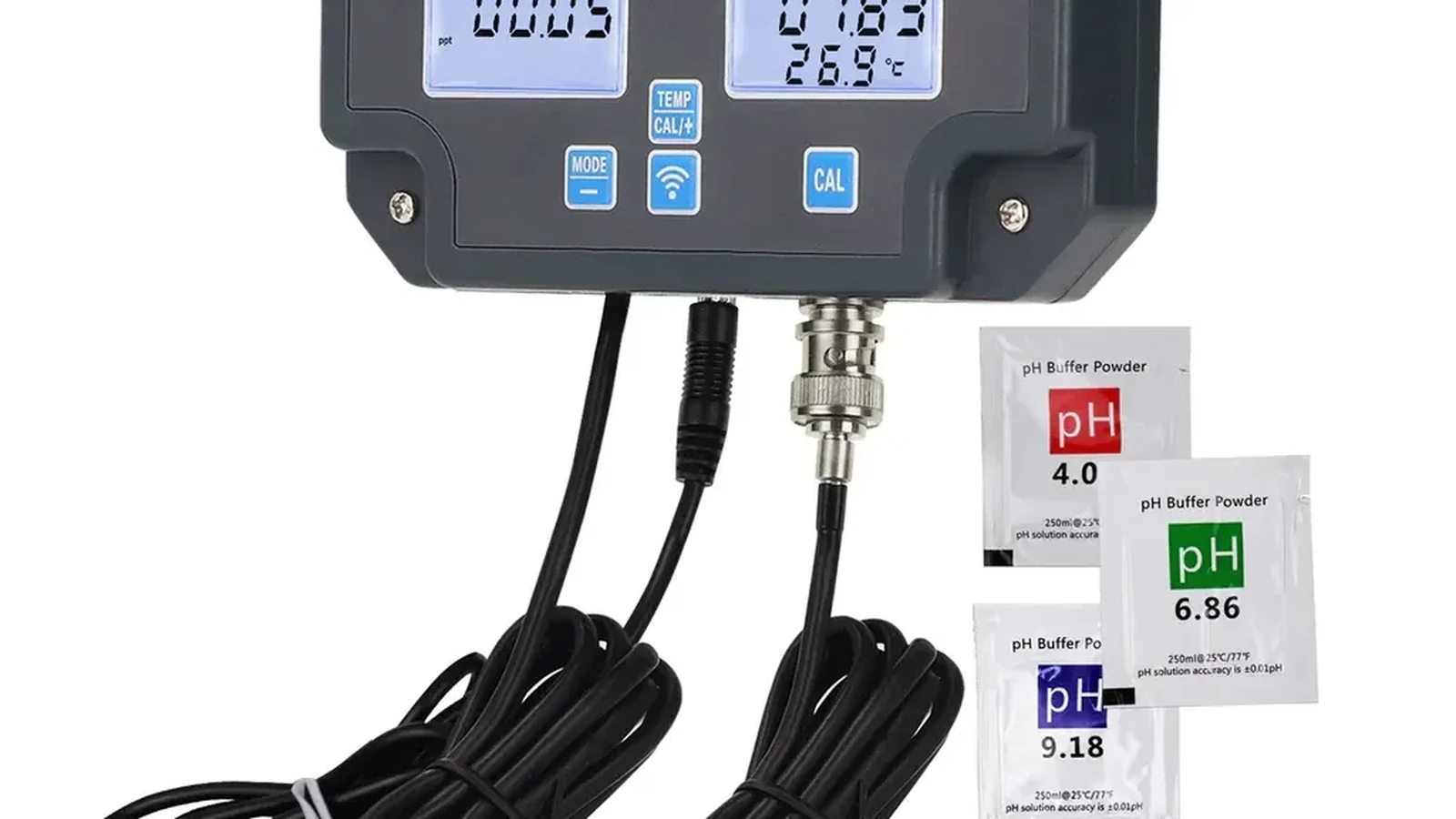
The buying decision is about the questions you want to answer after a reservoir change. We recommend assessing three layers separately:
| Layer to assess | Question to use when choosing | What to request in a demonstration |
|---|---|---|
| Current readings | What are the pH, EC and temperature readings now? | Show all three readings and how their measurement times are identified. |
| Historical reports | What readings were recorded around the change? | Open an earlier period and show the readings before and after an event. |
| Event observations | What did I do, and when? | Record a feed, top-up or reservoir replacement and show how you would find the corresponding readings. |
Use this as a proposed selection framework. A product need not put everything on one screen to meet your needs; ask whether you can follow the sequence clearly using its reports and your chosen observation record.
There is a documented example of these feature categories. Bluelab’s Guardian Monitor Wi-Fi support guide describes remote pH, EC and temperature monitoring through a mobile or web app. The same guide says Edenic provides real-time and historical reports, data visualisation and a journal for important observations. These are attributed features of that system; the description does not establish its logging interval or how journal entries align with readings.
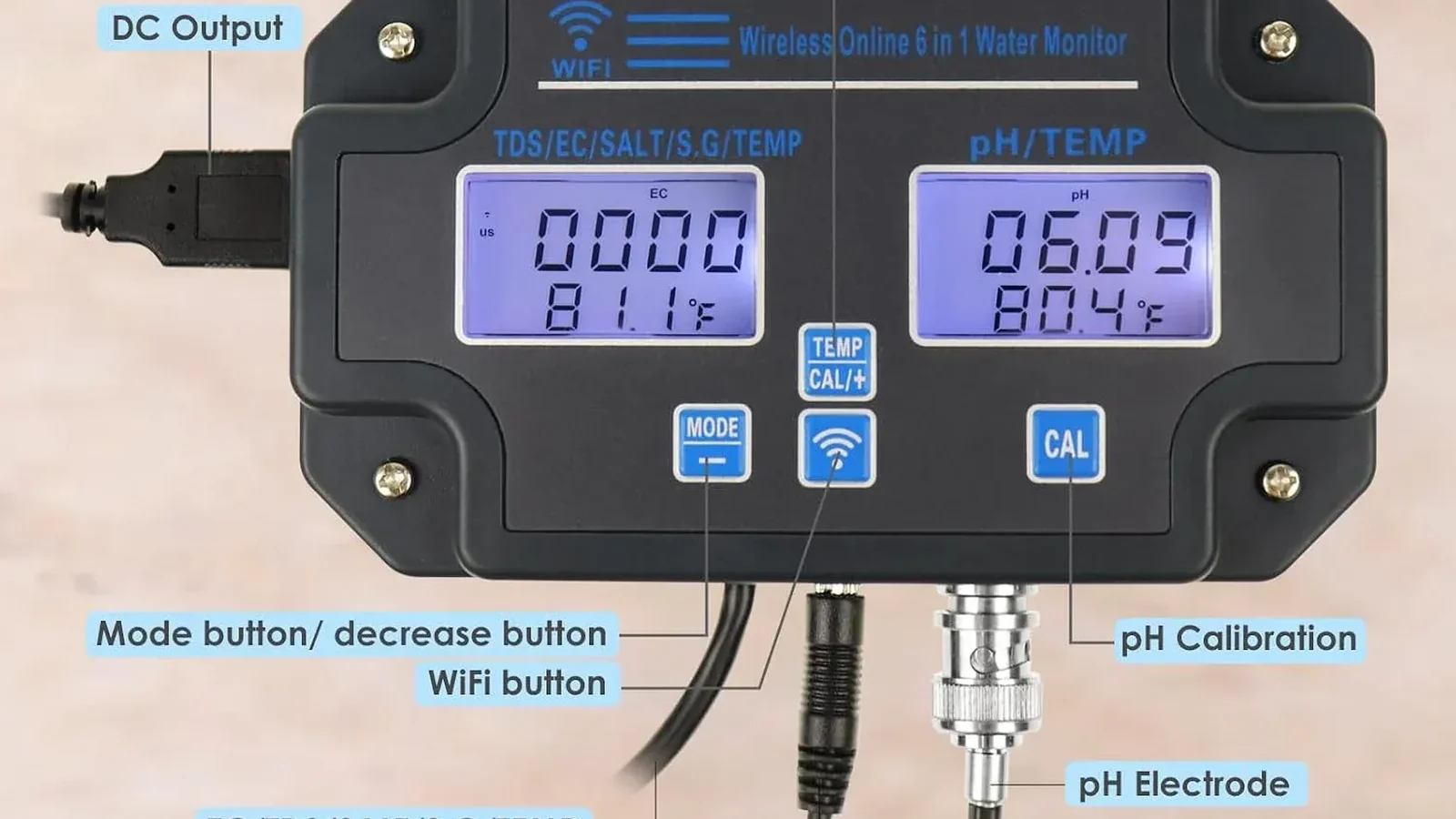
Give an extra TDS display a separate place in the decision. Bluelab explains that its meters measure EC and convert it to ppm when a ppm scale is selected. It describes those ppm values as a conversion guide and says true ppm requires chemical analysis. For those conductivity-derived readings, adding a TDS display adds no independent nutrient-composition measurement. Our recommendation is to prioritise a usable record of readings and interventions before treating another display scale as a reason to buy.
Test the history against a reservoir event
Before buying, ask the supplier to walk through one reservoir event from observation to report. We recommend the following demonstration as a practical assessment, rather than assuming that a feature labelled “history” or “journal” meets every requirement.
Bluelab’s Edenic description explicitly includes historical reports, visualisation and an observation journal. It provides an example of the categories to investigate, without establishing the detailed behaviour below for that system or any other monitor.
1. Define the record you want to retrieve
Use a proposed event record with these fields:
- Reservoir name or identifier.
- Event type: feed, top-up or full replacement.
- Date and time the event happened.
- What was added or changed, including the amount if known.
- References to pH, EC and temperature readings before and after the event, with their measurement times and units.
- Observations and uncertainties, kept separate from the recorded values.
Treat this as a recording worksheet, not a nutrient-adjustment procedure. For a reservoir replacement, we suggest marking the beginning of a new reservoir cycle so that your later review has an explicit boundary.
2. Check whether the timing is usable
Ask how often readings are saved and whether the report shows individual saved readings or summaries. Request an example covering the period immediately around an event, then a longer view covering several events. Choose the level of detail against the review you actually intend to perform.
For the journal, ask whether you can enter the time an event happened separately from the time you wrote the note. Test a note entered later in the day: can you associate it unambiguously with the intended period? If you prefer a separate notebook or spreadsheet, try the same exercise using the report’s dates, times and reservoir identifiers.
3. Test retrieval and reporting
Ask how long history remains accessible, whether you can select a date range, and what any download or export includes. If reviewing records outside the app matters to you, request a sample file and check the dates, units, reservoir identification and observation records yourself. Also ask what happens to the record during a connection interruption and which history or reporting features require a paid service.
These are purchasing questions, not confirmed capabilities of the documented example.
4. Keep observations distinct from explanations
For a hypothetical top-up, write “top-up recorded at 10:00” and select readings from before and after that time for review. Record the values you actually have; leave missing values identified as missing. As a review rule, describe the sequence first and reserve explanations for evidence that supports them. Do not turn a nearby change in a graph into a nutrient diagnosis.
If you choose to record ppm as well as EC, include the selected ppm scale in your worksheet. Bluelab’s conductivity guide distinguishes ppm500 and ppm700 conversions and advises matching the meter’s scale to the reference being followed. Keep the detailed conversion question separate from the main buying test: can you retrieve the readings and understand what was recorded around each intervention?
Choose the system whose records you can actually review
Make your final choice by asking for a complete example: a recorded reservoir intervention, the surrounding pH, EC and temperature readings, and a report you can return to later. We recommend shortlisting against that task before weighing extra display options.
Use this decision rule during the demonstration:
| Your intended use | Suggested acceptance check |
|---|---|
| Check present conditions remotely | Identify the current pH, EC and temperature readings and their measurement times. |
| Review feeds or top-ups afterwards | Retrieve an earlier period and locate the relevant event record alongside the readings. |
| Compare reservoir cycles | Identify replacement events and retrieve the history for each chosen cycle. |
| Keep your own records outside the app | Inspect a sample export or demonstrate a workable way to reference reports from your separate event log. |
Mark each check as demonstrated, unsuitable for your needs, or still unanswered. If an unanswered detail is essential to your intended use, obtain confirmation before committing to that model. If it concerns an optional feature you do not need, leave it out of the buying decision.
For the documented example, Bluelab describes remote pH, EC and temperature readings for Guardian Monitor Wi-Fi, with real-time and historical reports, visualisation and an observation journal through Edenic. Use that description as a starting point for questions about the exact model and service you are considering. It is a feature example rather than a product endorsement.
Keep the interpretation boundary clear, too. Bluelab states that its ppm readings are conversions from measured EC. Our recommendation is to judge a TDS option by whether it helps you use a chosen reference scale, while judging the history and journal by whether you can reconstruct your reservoir records. Do not make nutrient-composition measurement an acceptance criterion for a conductivity-derived TDS display.
Sources to consult
- Bluelab Guardian Monitor Wi-Fi support guide — the source for the attributed remote-reading, report and journal features.
- Bluelab: What are the different conductivity scales? — the source for EC-to-ppm conversion and its measurement limits.
Your next step is to take one feed, top-up or replacement record you would want to review and ask the supplier to show how you would find it again. Choose against the demonstrated result and the details confirmed for your intended setup.